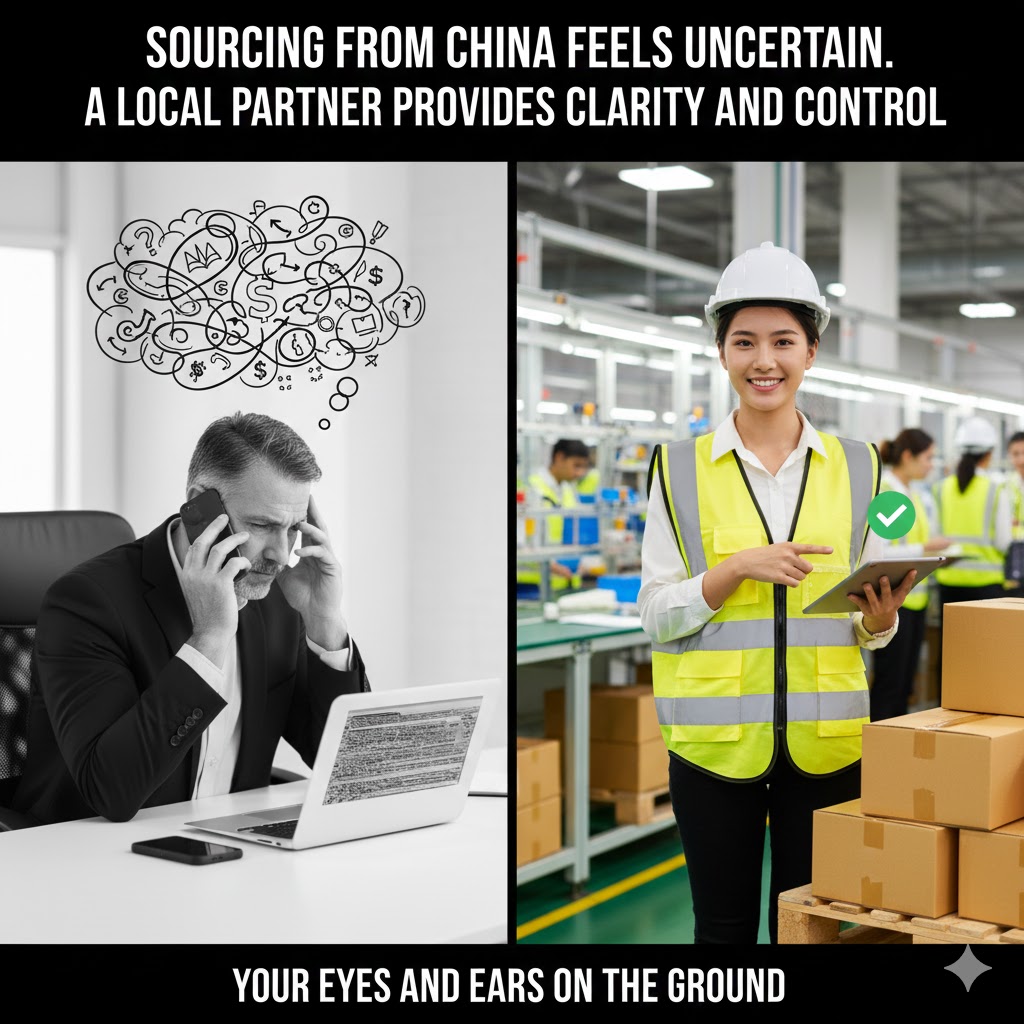
Sourcing from China feels uncertain. You worry about miscommunication, delays, and unexpected costs1. A local partner on the ground2 can give you the clarity and control you've been missing.
Without a local team, overseas buyers can't see the real production status3, true supplier capabilities, or cultural nuances that cause delays4. A local partner acts as your eyes and ears, verifying progress, managing communication, and solving problems on the ground before they impact your business.
These are not just small issues. They can derail entire projects, cost you thousands, and damage your brand's reputation. You need to see what's happening behind the curtain. Let's look at the specific problems that a local team helps you solve, problems you might not even know you have.
Does Cultural Misunderstanding Really Cause Sourcing Delays?
You ask a simple question but get a complicated answer. This back-and-forth wastes time and creates confusion. What if communication could be simple, direct, and effective every time?
Yes, cultural differences in communication5 are a major source of delays. A direct question like "What's the price?" might not get a direct answer from a Chinese supplier. They often provide context first, which can frustrate overseas buyers and slow down the entire sourcing process.

I see this happen all the time. A client from the US will ask a supplier, "What is the price for 1,000 units?" They expect a number. Instead, the supplier might start talking about recent raw material costs, or explain why their product quality is better than a competitor's, or ask more questions about details. The client gets frustrated because they just want a simple answer. This isn't because the supplier is being difficult. It's a cultural difference in communication styles.
The Direct vs. Indirect Approach6
In many Western cultures, business communication is direct. In China, it's often more indirect and relationship-focused. The supplier is trying to build context and trust before talking about money. This mismatch creates friction.
| Western Buyer Expectation | Chinese Supplier Response |
|---|---|
| "What is the price?" | "Let me tell you about the material..." |
| "Can you meet this deadline?" | "We will do our best for you." |
| "Is this a problem?" | "The situation is a bit complex." |
As a local partner, we act as a bridge. We understand the buyer's need for a direct answer, and we also understand the supplier's logic7. We can get the direct answer for you and explain the necessary context, making the entire process faster and much less confusing.
Why Do Suppliers Ignore You When You're Thousands of Miles Away?
Your messages go unanswered. Your project is stalled with no explanation. Being far away makes you feel powerless. A local presence can completely change your supplier's attitude and responsiveness8.
Suppliers often prioritize clients they believe can hold them accountable. Physical distance makes you a lower priority. When problems arise, it's easier to ignore an overseas client than one who has a local team that can visit the factory at any time. Your proximity determines their urgency.
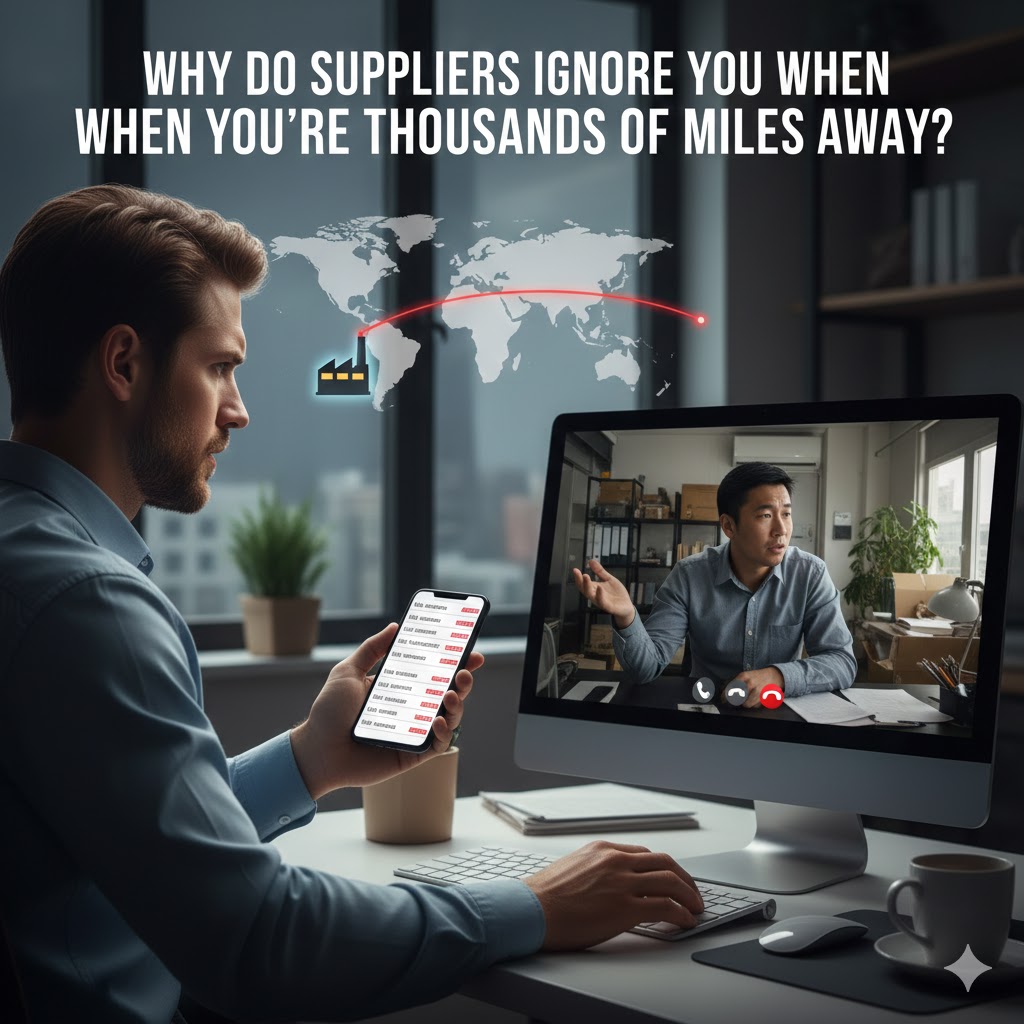
I once worked with a client from the Netherlands who was about to give up. He placed an order with a Chinese factory, and six months later, the goods still hadn't shipped. The factory stopped responding to his emails and calls. He was desperate. When he asked for our help, we contacted the factory. We found out the molds and materials were never properly prepared. The factory just put the project aside when they ran into a small problem because the client was too far away to do anything about it.
Turning Invisibility into Presence
Our next step was simple. We told the factory, "We are the client's local partner, and we are scheduling a visit to your factory next week to see the progress." The effect was immediate. Suddenly, the project was their top priority. They started actively working to solve the issues, and the order was moving again within days. This story shows a critical truth about sourcing: physical presence creates accountability9. When a supplier knows you have a local team that can show up at their door, you are no longer just an email address. You become a real, high-priority partner they cannot afford to ignore.
Are You Really Buying from the Factory?
You found a supplier online, but their prices seem high. You suspect they aren't the real manufacturer. This uncertainty adds risk and cost to every order10 you place.
Many online suppliers are trading companies, not factories11. This adds layers of cost and miscommunication. Without a local team to verify the source, you can't be sure you're getting the best price, clear communication, or proper quality control directly from the manufacturer.
Many buyers don't realize that the "supplier" they found on a large B2B platform might be a distributor, who is buying from another distributor, who is buying from the actual factory. Each middleman adds their own markup, so you end up paying much more than you should. More importantly, this creates huge risks for quality control. The person you are talking to has no direct control over production. You might specify you want Product A, but by the time the message gets to the factory floor, it gets distorted, and you receive Product B.
How a Local Team Finds the Real Factory
This is where having a local team is essential. We can cut through the noise and identify the true source of your product. We do this through:
- Factory Background Reviews12: We check business licenses, certifications, and operational history to confirm they are a legitimate manufacturer.
- On-Site Audits13: Nothing is more revealing than visiting the factory in person. We can see their production lines, assess their scale, and talk to the people actually making your product.
By verifying your supplier, we ensure you are working directly with the source. This not only lowers your costs but also gives you a direct line of communication and much greater control over the final product quality.
How Do You Know if Production Has Actually Started?
Your supplier says production is on schedule. But you have no proof, just their word. This lack of visibility creates anxiety and risks your entire sales plan.
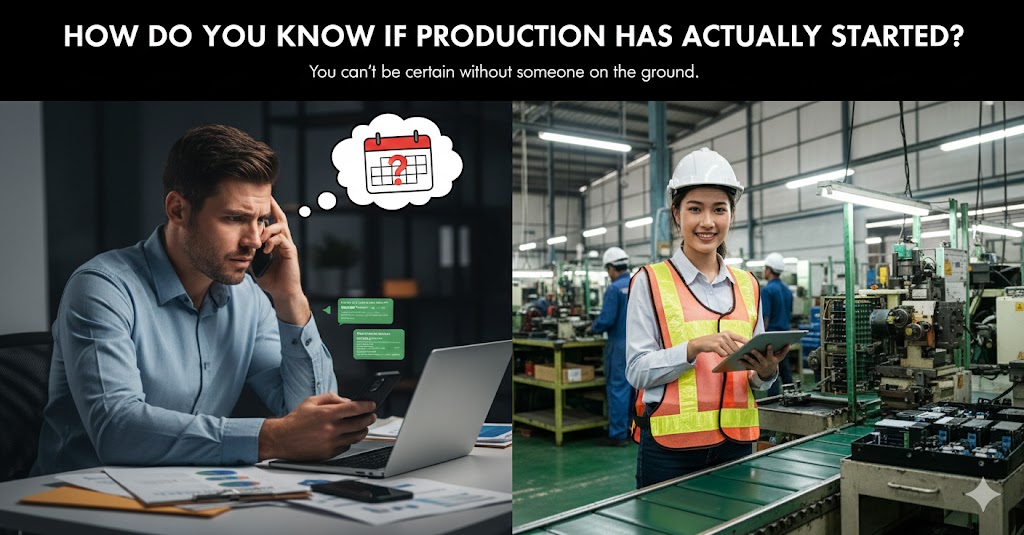
You can't be certain without someone on the ground. Suppliers might say production has started when they haven't even scheduled it. A local team provides true visibility by visiting the factory, tracking real-time progress, and inspecting quality at every stage, preventing costly surprises.
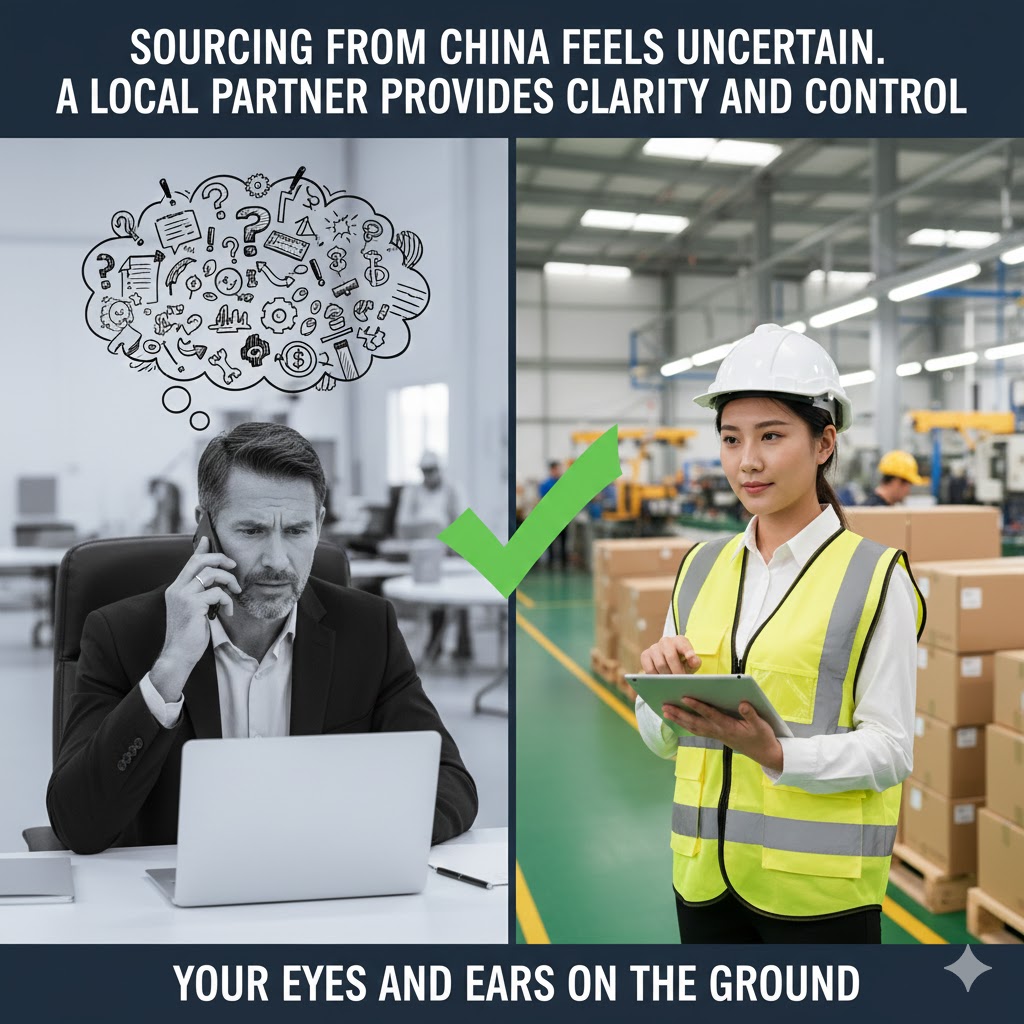
A supplier's promise is not a production plan. I’ve seen many cases where a client was told "production has begun," but in reality, the factory hadn't even ordered the raw materials yet. This creates a chain reaction of delays that can ruin a product launch. You also can't see small problems that turn into big ones. For example, a simple printing error on the packaging might not be caught until the entire batch is finished. At that point, fixing it is expensive and time-consuming.
From Blind Trust to Clear Visibility
A local team replaces blind trust with clear, verifiable information. We are your eyes on the factory floor. We follow up on the actual production schedule and conduct key inspections to lower your risk.
- Production Follow-Up14: We go to the factory to see if your order is actually on the production line.
- During-Production Inspection (DUPRO)15: We check the products mid-production to catch quality issues early.
- Pre-Shipment Inspection (FRI)16: We inspect the finished goods and packaging before they leave the factory.
This process ensures that what you ordered is what gets shipped. We find and fix problems like detail errors or incorrect packaging when they are small and manageable, protecting your timeline and your investment.
Are You Overpaying for Shipping from China?
Shipping costs are eating into your profits. You see high volumetric weight charges17 but don't know how to fix them. Wasted space is wasted money.
Very likely. Inefficient packing, deformed boxes, and unconsolidated shipments lead to high volumetric weight charges17. A local team can optimize your packaging18 and consolidate goods before they ship19, directly reducing your logistics costs and saving you a significant amount of money on every shipment.
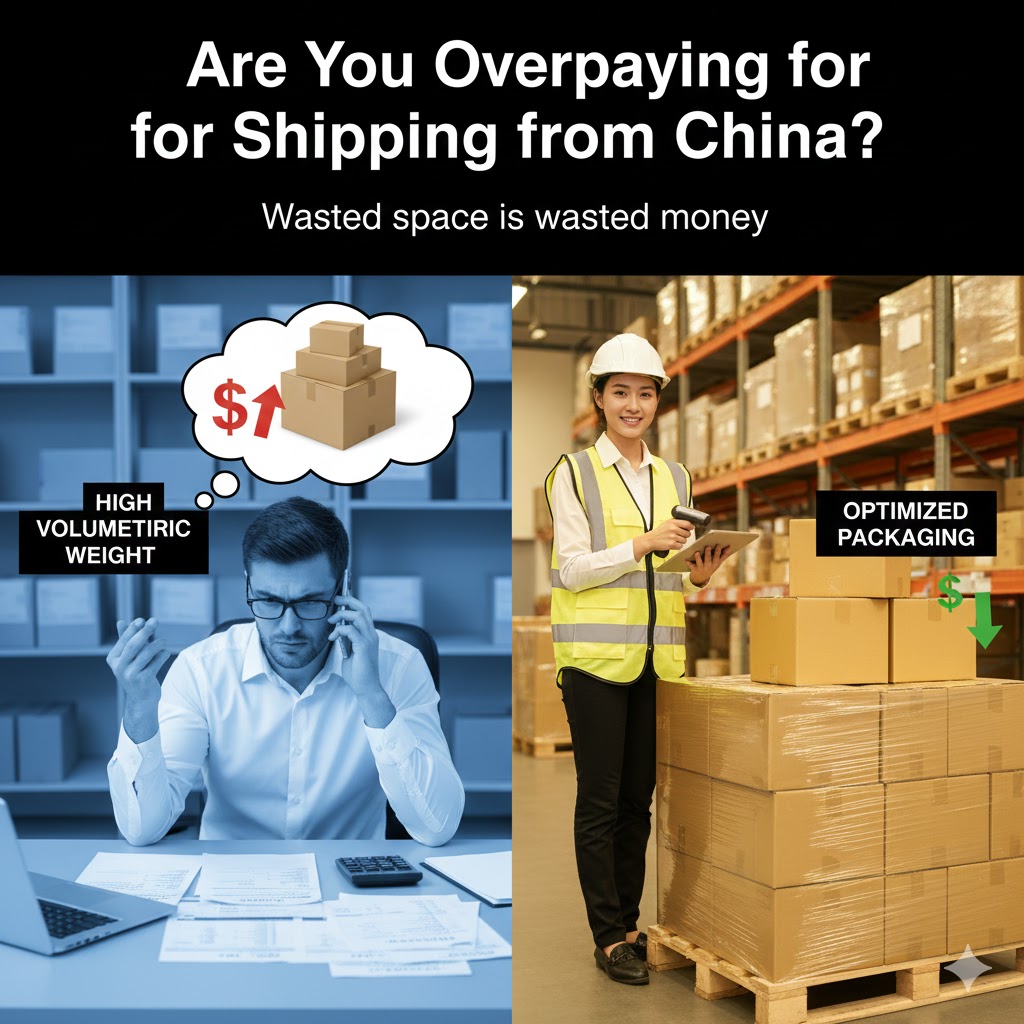
Shipping is complex, and carriers charge based on either actual weight or volumetric weight, whichever is greater. Volumetric weight is a measure of how much space a package takes up. Many buyers overpay because their goods are packed inefficiently, creating wasted space. I have a great example of this. A US client had several orders from different factories. The total actual weight of the goods was 98kg. However, because some boxes were half-empty and one was crushed out of shape, the total volumetric weight was much higher.
The 2380 RMB Savings Story
We stepped in as his local partner. First, we repacked the goods from the deformed box into a new, standard-sized carton. Then, with his permission, we consolidated items from different boxes to reduce empty space. For items that couldn't be combined, we cut the boxes down to fit the products perfectly. The results were amazing. By optimizing the packaging, we reduced the total volumetric weight to be less than the actual weight. This single action saved the client 2380 RMB in shipping fees on just one shipment. This is a level of hands-on optimization that is impossible to manage from overseas.
Conclusion
A local team in China20 isn't a cost; it's an investment in clarity, control, and efficiency. It turns the unseen into the seen, giving you a real competitive advantage.
Understanding these challenges can help you mitigate risks and improve your sourcing strategy. ↩
A local partner can provide real-time insights and problem-solving capabilities that are crucial for successful sourcing. ↩
Verifying production status ensures transparency and helps you manage timelines effectively. ↩
Exploring this can help you navigate cultural differences and improve communication with suppliers. ↩
Understanding these differences can enhance your negotiation and communication strategies. ↩
Learning about these approaches can help you adapt your communication style for better results. ↩
Understanding their logic can bridge communication gaps and lead to more effective negotiations. ↩
A local presence can make you a priority for suppliers, improving communication and project timelines. ↩
Knowing this can help you leverage your presence to ensure supplier reliability and responsiveness. ↩
Knowing this can help you choose direct manufacturers, reducing costs and improving quality control. ↩
Identifying the true nature of your supplier can help you avoid unnecessary costs and ensure quality control. ↩
These reviews can verify the legitimacy of a manufacturer, ensuring you work with credible suppliers. ↩
On-Site Audits provide firsthand insights into a supplier's capabilities and production processes. ↩
It ensures that your order is on track and helps catch potential issues early in the production cycle. ↩
DUPRO helps identify quality issues early, reducing the risk of costly post-production fixes. ↩
FRI ensures that the final products meet your specifications before they are shipped, protecting your investment. ↩
Understanding these charges can help you optimize packaging and reduce shipping expenses. ↩
Optimizing packaging can minimize wasted space, leading to significant savings on shipping fees. ↩
Consolidation reduces shipping costs and ensures more efficient logistics management. ↩
A local team provides on-the-ground support, enhancing control and efficiency in your sourcing operations. ↩