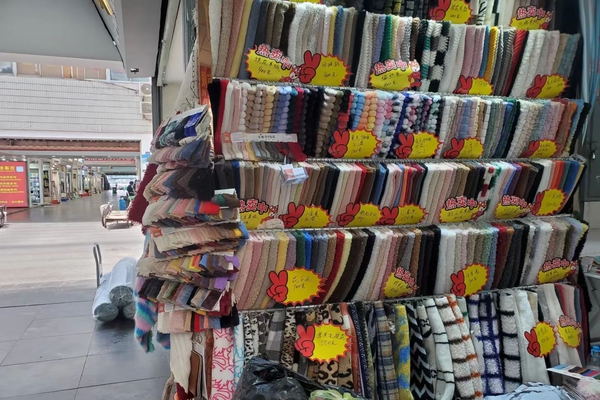
Struggling to find the right fabrics for your brand? Navigating the global textile market can be overwhelming, leading to costly mistakes and lost time. This guide clarifies your next move.
Keqiao Textile City1 is the world's largest wholesale market2 for ready-made fabrics, ideal for buyers needing variety and volume. It is not a factory hub for custom development or small orders. Success depends on understanding its unique workflow and managing the process, not just finding a stall.
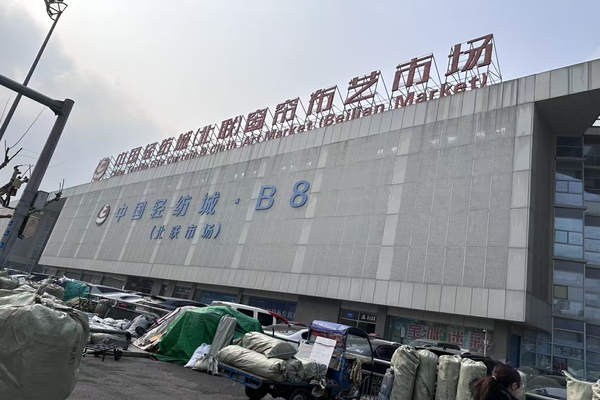
Going to Keqiao can feel like a pilgrimage for anyone in the apparel or home goods industry. It's enormous, chaotic, and full of opportunity. But opportunity can quickly turn into a liability if you go in with the wrong expectations. Many buyers I've worked with are surprised to learn it's not just a collection of factories. To really make it work for you, we need to break down what it is, who it's for, and how to navigate it properly. Let's dive into the details.
Why does Keqiao matter in global textile sourcing?
Finding diverse, trendy fabrics is a constant battle. Your competitors seem to launch new collections faster, leaving you feeling a step behind. Keqiao centralizes the world's textile supply3, giving you an unmatched edge.
Keqiao is the world's largest textile hub, offering unparalleled variety, speed for in-stock fabrics, and competitive pricing. It serves as a massive showroom, connecting buyers to China's vast network of textile mills4, often through traders located in the market stalls themselves.
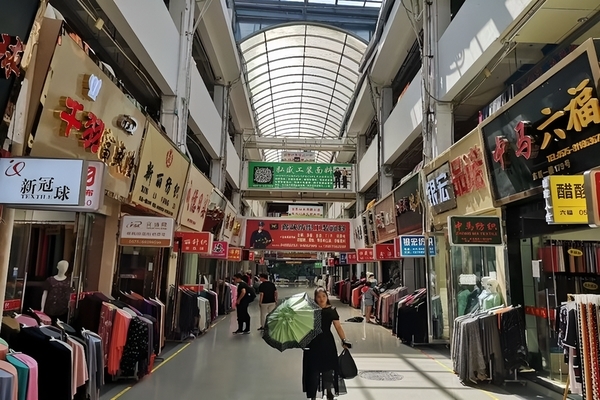
The sheer scale of Keqiao is hard to comprehend until you're there. It's more than just a market; it's an entire city district dedicated to textiles. This concentration creates a unique sourcing environment. You can physically touch and compare thousands of fabrics in a single day, something impossible to do online or by visiting individual factories. This is its primary power.
The Real Structure of Keqiao
Most stalls in Keqiao are not operated by the mills that produce the fabric. They are run by trading agents or distributors. They curate fabrics from various mills, creating a one-stop-shop experience. This is great for variety but adds a layer of communication that can complicate things. You are not talking to the source.
Keqiao vs. Direct Factory Sourcing
Understanding the difference is key to managing your expectations. One isn't inherently better than the other; they serve different needs.
| Feature | Keqiao Market Sourcing | Direct-to-Factory Sourcing |
|---|---|---|
| Variety | Extremely High | Limited to factory's specialty |
| MOQ | Medium-High (e.g., 500-1000m) | Very High (e.g., 3000m+) |
| Customization | Low (existing designs only) | High (full R&D support) |
| Speed (for stock) | Very Fast | Slower (made-to-order) |
| Contact Point | Trader / Intermediary | Factory Sales / Technicians |
| Process Control | Difficult, requires follow-up | Easier, direct communication |
When is Keqiao the right place to source fabrics?
Is your product line feeling a little stale? You see competitors launching new designs faster, and you're struggling to keep up. Keqiao is perfect for quickly sourcing new, ready-to-ship fabrics.
Keqiao is ideal if you need existing fabric designs5 in medium to large quantities6, typically over 500-1000 meters per color. It's a great fit for experienced buyers who prioritize variety and speed over deep customization7 and are comfortable with wholesale market2t dynamics](https://openlab.citytech.cuny.edu/bmendez-eportfolio/files/2019/11/Regional-Textile-Assignment.pdf)%%%FOOTNOTE_REF_8%%%.
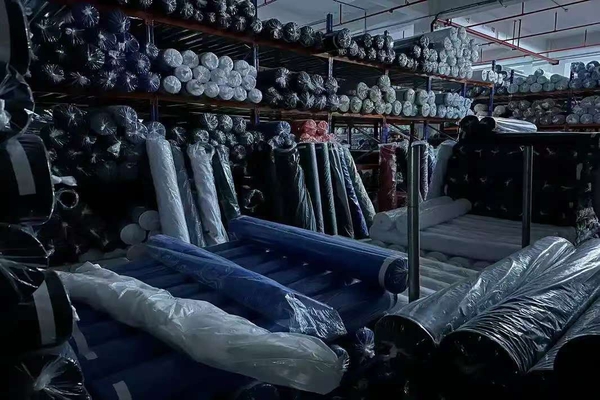
I always tell clients that Keqiao is a tool, and you have to use it for the right job. It’s a fantastic resource if your business model aligns with how the market operates. If you're a brand that needs to refresh collections with new prints, textures, and popular materials, Keqiao is your playground. You can find what's trending and get it into production quickly.
The Ideal Keqiao Buyer Profile
You'll have a much higher chance of success if you fit this profile. It's less about the product you're making and more about your operational needs and capabilities.
You are a good fit for Keqiao if:
- You need volume: Your typical order is at least one full dye lot, which is often 500-1000 meters or more per color. The market is built for bulk.
- You are buying "off-the-shelf": You are looking for existing fabrics. You might ask for a custom color, but you are not developing a new fabric structure from scratch.
- Speed is a priority: You need to get your hands on ready-made fabric quickly to start production.
- You have experience: You understand the risks of working with intermediaries and have a process for verification and quality control. You know that a great price often requires more hands-on management.
This is where many Amazon sellers and mid-sized brands thrive. They need to source 2000 meters of a specific linen-cotton blend in five colors, and Keqiao is the most efficient place on earth to do that.
When is Keqiao NOT the best option for buyers?
You have a great idea for a unique, custom-developed fabric. You go to the market, and suppliers all say "no problem," but the samples are wrong. It's time to understand when to bypass Keqiao.
Avoid Keqiao for small orders (under a few hundred meters), highly technical or custom-developed fabrics, or if you need absolute IP protection. The market is not structured for small-scale sampling, deep R&D, or startups needing low MOQs.

I've seen many startups and small brands get their hopes up in Keqiao, only to be disappointed. They come looking for 50 meters of fabric to test a new design and are met with confusion. The business model of the market stalls simply doesn't support this.
The Minimum Order Quantity (MOQ) Trap
The stalls in Keqiao are not selling retail. They are taking wholesale orders on behalf of mills. The MOQ isn't set by the stall owner; it's set by the factory's dyeing or weaving minimums. A stall might show you a fabric, but to produce it, they have to order a full batch from the mill. This is why asking for 100 meters is often impossible.
The Customization and IP Challenge
If you're developing a proprietary fabric, Keqiao is the wrong place.
- Lack of Technical Expertise: The stall owners are salespeople, not textile engineers. They can't help you with technical specifications, yarn counts, or performance finishes. That conversation needs to happen directly with a mill's R&D team.
- IP Risk: Showing your innovative design in an open market is risky. The stall owners work with many factories and many buyers. There's little to stop them from offering your "unique" fabric to someone else.
For startups or brands needing specialized materials, it's far better to work with a sourcing partner who can identify and vet a specific, suitable factory.
How do fabric markets in Keqiao actually work?
You're walking into a massive, disorienting market with thousands of stalls. You could waste days talking to the wrong people and leave empty-handed. Here’s the clear, step-by-step workflow for sourcing from Keqiao.
You find a fabric at a stall, get a small sample swatch (a "cutting"), and place an order. The stall owner, often a trader, then places your order with a mill. They are your intermediary. All your follow-up and quality control happens through them.
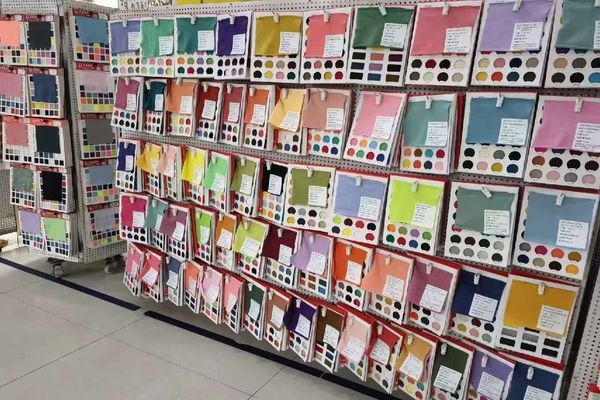
The process seems simple on the surface, but the hidden layers are where the risks lie. My job is often to manage this process for clients because they don't have a team on the ground. It's not about finding the fabric; it's about making sure the fabric you ordered is the fabric you get.
The Step-by-Step Sourcing Process
- Browsing and Collecting Swatches: You walk through the market districts, visiting stalls that specialize in your fabric category (e.g., cottons, polyesters, knits). You request small cuttings or sample cards (we call them "sè kǎ") of fabrics you like.
- Inquiry and "Quotation": You present the swatch to the stall owner and ask for price, MOQ, and lead time. This is a preliminary quotation. The stall owner may need to call the mill to confirm, especially for current pricing.
- Placing the Order and Deposit: Once you decide, you'll place a formal order and pay a deposit, usually 30%. You are not paying the factory; you are paying the stall's trading company.
- The Waiting Game (Production & Coordination): This is the most critical and overlooked stage. The stall owner sends your order to the mill. Now you wait. Without follow-up, your order can easily get delayed or pushed back for a larger customer.
- Inspection and Balance Payment: Before the final payment, the goods must be inspected. This should happen at the mill or a consolidation warehouse, NOT after they've been shipped to you. Once you approve the inspection9, you pay the balance.
The key takeaway is that you are managing a relationship with a trader, who is managing a relationship with a mill. You have no direct control or visibility.
What are the common mistakes foreign buyers make in Keqiao?
You found the perfect fabric at a great price. You're excited. But three months later, the bulk order arrives, and it's a disaster. You can avoid this by learning from the common mistakes I see every year.
The biggest mistakes are assuming stall owners are factory owners, trusting that a sample swatch guarantees bulk quality, and underestimating the need for constant follow-up. Buyers often neglect on-site inspection9, leading to costly surprises upon delivery.

I once had a client who was thrilled to have found a "factory" in Keqiao selling recycled polyester fabric at a fantastic price. He placed a large order based on a beautiful sample. When the goods arrived, the color was inconsistent, and lab testing showed it wasn't 100% recycled material. His mistake? He trusted the stall and skipped the process control.
Mistake 1: Confusing a Stall with a Factory
This is the most fundamental error. 99% of stalls are intermediaries. They might have a nice showroom and business cards that say "XX Textile Co., Ltd.," but they don't own the looms. Believing they are the factory gives you a false sense of security and control.
Mistake 2: Assuming the Sample Guarantees Bulk Quality
A small cutting or even a 1-meter sample proves nothing about bulk production. Color consistency, defects, and even material composition can vary dramatically in the final order. The sample gets you the order, but only a pre-shipment inspection9 verifies it.
Mistake 3: Neglecting Process Management
This is the "order and forget" mistake. You place the order and assume the stall owner will handle everything. In reality, they are juggling dozens of orders. Your order needs active follow-up: Is it on the production schedule? Is the greige fabric ready? Is it in the dye house? Without this, delays are almost guaranteed.
Mistake 4: Focusing Only on Price
The low prices are tempting, but they often come with hidden costs. A cheap price might mean the supplier is using lower-grade yarn or has poor quality control. The real cost of a "cheap" fabric is realized when you have to reject an entire shipment. Successful sourcing is about total cost and risk, not just the per-meter price.
Conclusion
Keqiao is a powerful sourcing tool for volume buyers needing variety. But success depends on process control and clear expectations, not just finding the right stall in the market.
Explore the significance of Keqiao Textile City as a global fabric sourcing hub. ↩
Learn how wholesale markets can provide variety and competitive pricing for fabric sourcing. ↩
Understand the complexities of the textile supply chain and how to navigate it effectively. ↩
Understand how textile mills operate and their importance in sourcing. ↩
Explore strategies for sourcing ready-made fabric designs efficiently. ↩
Find out why sourcing in bulk can be beneficial for your business. ↩
Learn about the challenges of customizing fabrics and when it's appropriate. ↩
Learn about the unique market dynamics that influence sourcing in Keqiao. ↩
Learn why inspecting fabric before shipment is essential for quality assurance. ↩