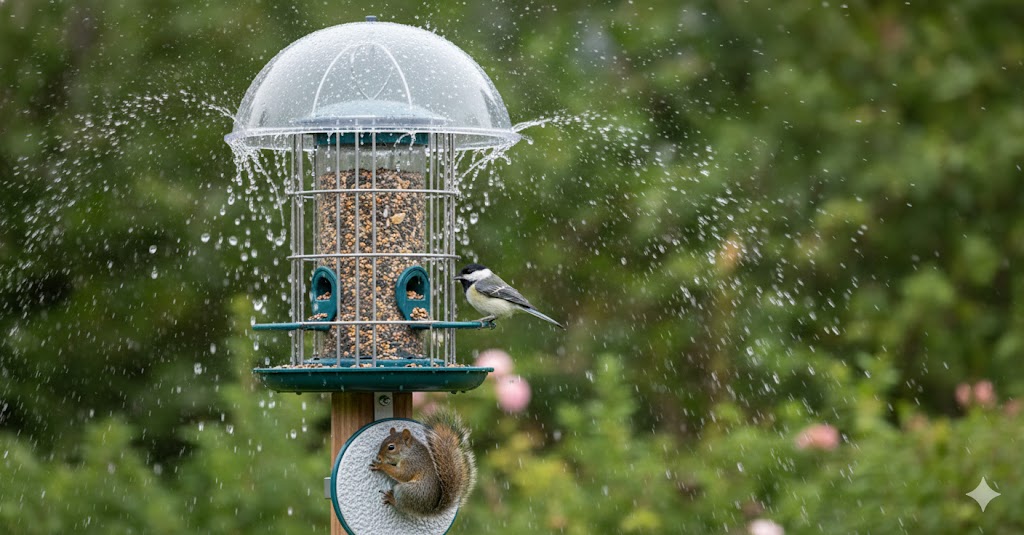
Why Most Bird Feeders Fail Outdoors — And What Actually Works
If you’ve ever set up a bird feeder1 that worked fine at first,
only to struggle with wet seed, constant mess, or squirrels a few weeks later —
you’re not doing anything wrong.
This is one of the most common frustrations backyard bird lovers face.
The problem usually isn’t the feeder itself.
It’s how outdoor conditions slowly overwhelm a setup that was never designed for them.
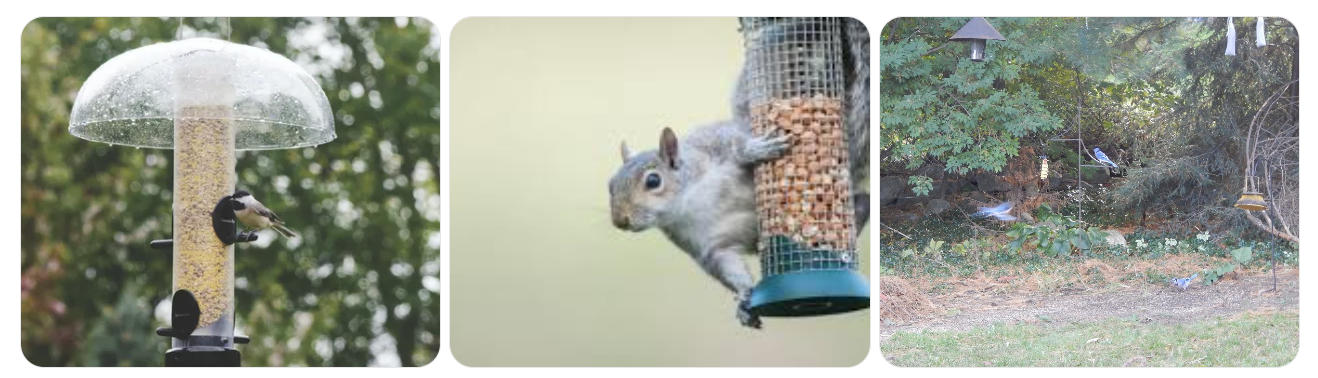
The Most Common Outdoor Feeder Problems (Seen Again and Again)
Across different backyards and seasons, the same patterns tend to repeat:
- Bird seed becomes damp or moldy after rain
- Squirrels climb, hang, or shake feeders until food spills out
- Feeders need frequent cleaning and refilling
- Birds stop visiting when feeders become unstable or messy
What’s frustrating is that many people respond by replacing the feeder —
only to watch the same problems return.
That’s not bad luck.
It’s a design mismatch.
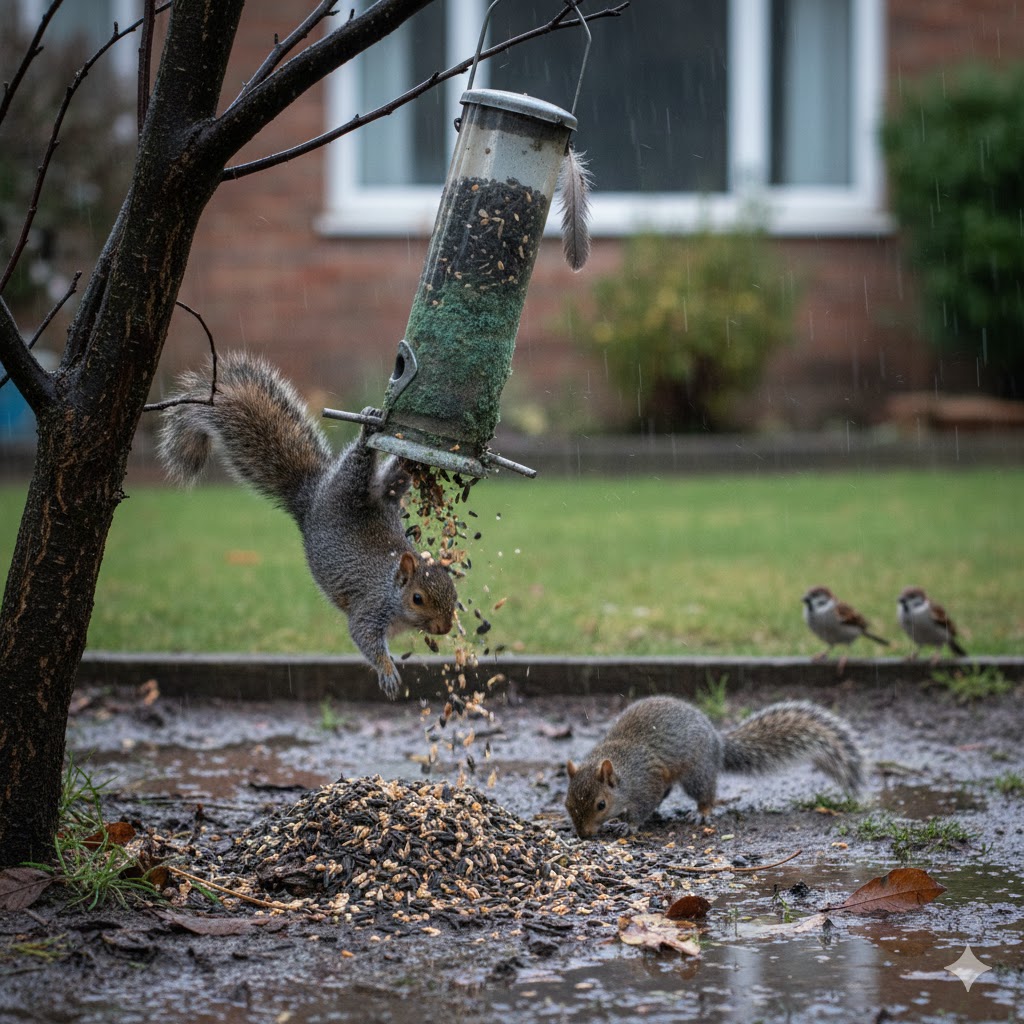
Why Replacing the Feeder Usually Doesn’t Solve the Problem
Most bird feeders are designed to hold food, not to manage exposure.
Once a feeder is placed outdoors, it faces forces that go far beyond normal use:
- Rain doesn’t fall straight down — it blows sideways
- Animals don’t approach politely — they climb, jump, and hang
- Sun, moisture, and movement slowly degrade materials
Because of this, even a “better” feeder often fails in the same way.
The issue isn’t quality alone.
It’s exposure and access.
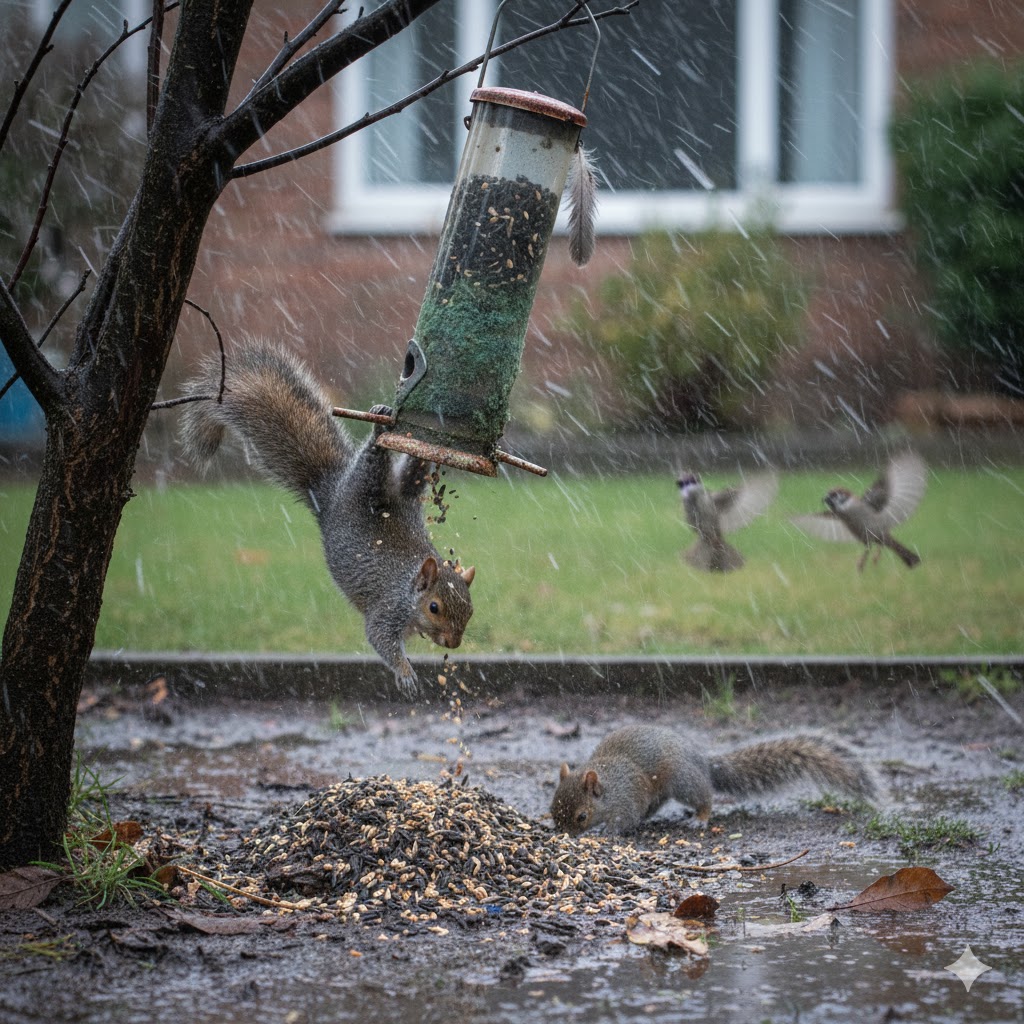
A Simple Shift in Thinking: From Feeder to Setup
One pattern becomes clear over time:
Outdoor feeder problems rarely come from one cause —
so they rarely get solved by one single add-on.
Rain enters from above and the sides.
Squirrels approach from below or from nearby branches.
Movement and vibration make everything worse.
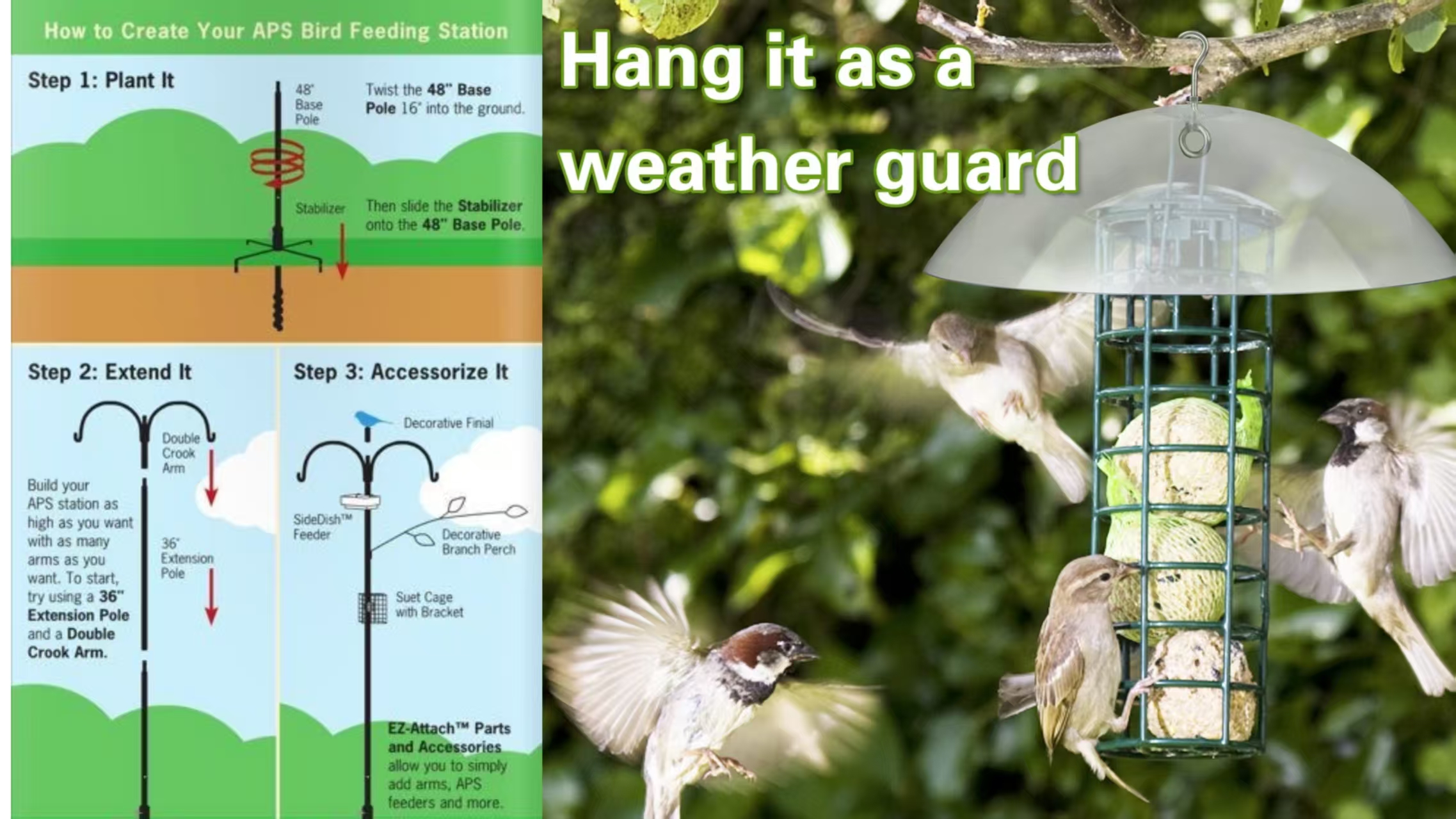
This is why single fixes often disappoint.
For readers interested in how a system-based protection approach works in real backyards,
you can explore a practical example here:
Bird Feeder Protection System
What tends to work better is not chasing symptoms,
but adjusting the entire setup.
What Actually Helps in Real Backyards
Based on repeated use and observation, a few principles stand out:
1. Reducing direct rain exposure2 matters more than sealing
Trying to make a feeder completely waterproof is unrealistic.
But reducing how much rain reaches the seed can significantly improve results.
2. Blocking access works better than deterring animals
Squirrels are persistent and adaptable.
Interrupting their climbing path is often more effective than relying on deterrents.
3. Stability affects bird behavior
A feeder that swings or tips too easily discourages birds and invites animals.
These aren’t product features —
they’re behavioral and environmental patterns.
When Protection Makes Sense — And When It Doesn’t
Being honest about limitations is important.
Protection setups help most when:
- Feeders are exposed to rain or wind
- Squirrels access feeders from below or nearby structures
- The goal is to reduce mess and maintenance
They are less effective when:
- Feeders are already under a roof or deep cover
- Animals can jump directly from close branches
- Expectations are set at “zero maintenance forever”
No outdoor setup is completely problem-proof.
But thoughtful protection can make a noticeable difference.
A System Approach, Not a Single Fix
Over time, many experienced backyard setups evolve toward the same idea:
Treat feeder protection as a system, not a single accessory.
That usually means thinking about:
- Top exposure
- Access paths
- Stability
- Compatibility with existing feeders
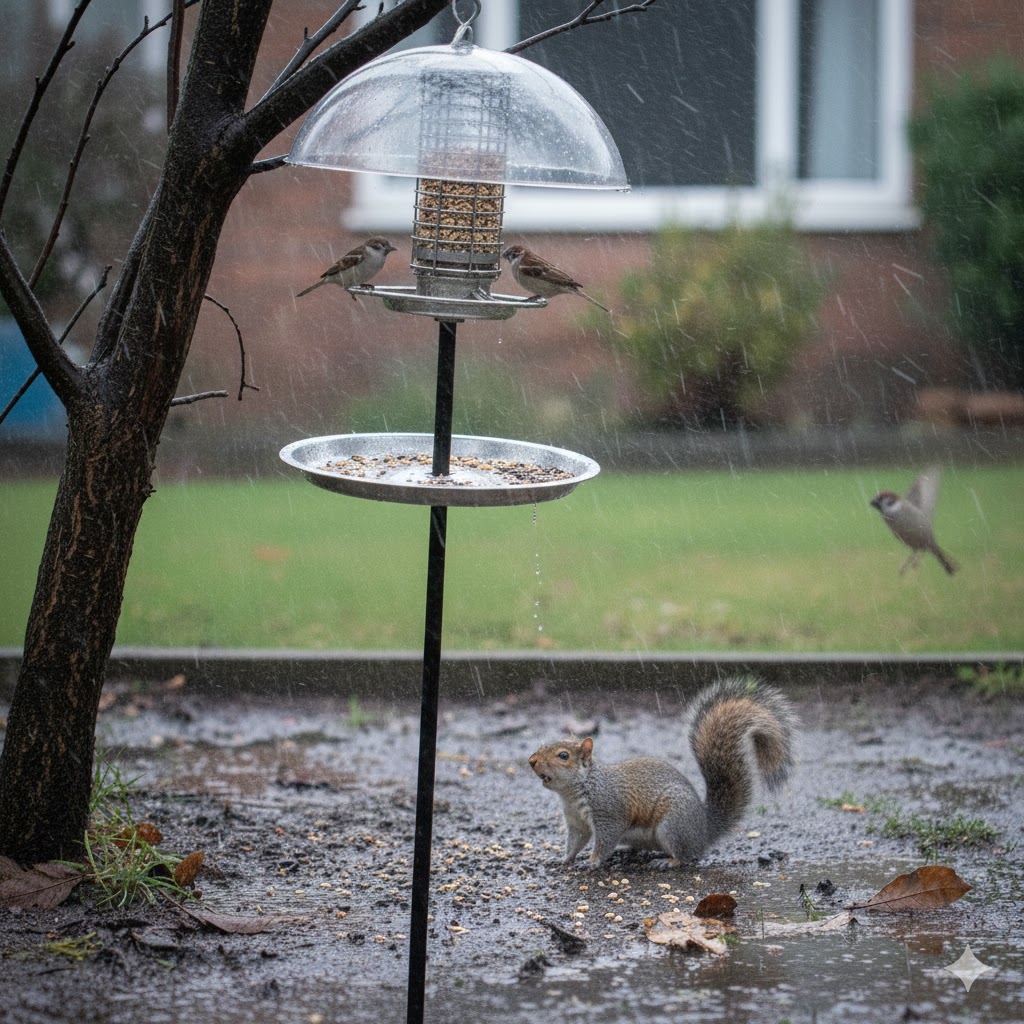
This approach doesn’t eliminate every challenge —
but it reduces the most common ones.
If you’d like to see how this idea is applied step by step,
this page walks through the full setup logic in more detail:
How a Bird Feeder Protection System Works
Why This Matters Before Choosing Any Product
Before deciding what to buy, it helps to understand:
- What problem you’re actually trying to reduce
- Where that problem originates
- Whether your setup addresses causes or symptoms
Once those questions are clear,
choosing the right solution becomes much easier.
A Final Thought
Outdoor bird feeding is meant to be enjoyable, not a constant maintenance task.
Most frustrations don’t come from doing something wrong —
they come from expecting indoor simplicity in an outdoor environment.
Understanding that difference is often the first real step toward a better setup.
If you’re exploring ways to protect your feeder more effectively,
start with the system — not just the feeder.
this overview may help you compare different protection levels before deciding:
View the Bird Feeder Protection Overview
About the Author
Written by the Backyard Research Team
This article is based on long-term observation of common backyard bird feeder issues, including rain exposure, animal interference, and maintenance challenges3 across different outdoor environments.
Rather than focusing on product comparisons or rankings, our work emphasizes understanding why these problems occur and which approaches consistently help reduce them in real-world setups4.
Our content is created to help readers make better decisions before choosing any solution — whether that means adjusting an existing setup, improving protection, or deciding that no change is needed at all.
We believe honest boundaries matter as much as useful advice.
That’s why our articles clearly explain both what can help and where expectations should remain realistic.
Editorial Standards & Content Approach
- Insights are derived from repeated real-world scenarios, not single-use tests
- We avoid exaggerated claims and absolute guarantees
- Recommendations focus on setup logic and environmental factors, not brand promotion
- Content is reviewed to ensure clarity, accuracy, and practical relevance
This page is part of an ongoing effort to document patterns that appear consistently in outdoor bird feeding — so readers can avoid common pitfalls and reduce trial-and-error.
Last reviewed and updated: [Jan.2026]
Explore this link to find top-rated bird feeders designed to withstand outdoor conditions and attract more birds. ↩
Explore solutions to minimize rain exposure and keep your bird feeders functional in wet weather. ↩
Gain insights into typical maintenance issues and how to address them for a hassle-free bird feeding experience. ↩
Explore practical examples of successful bird feeder setups that have been tested in real-world conditions. ↩