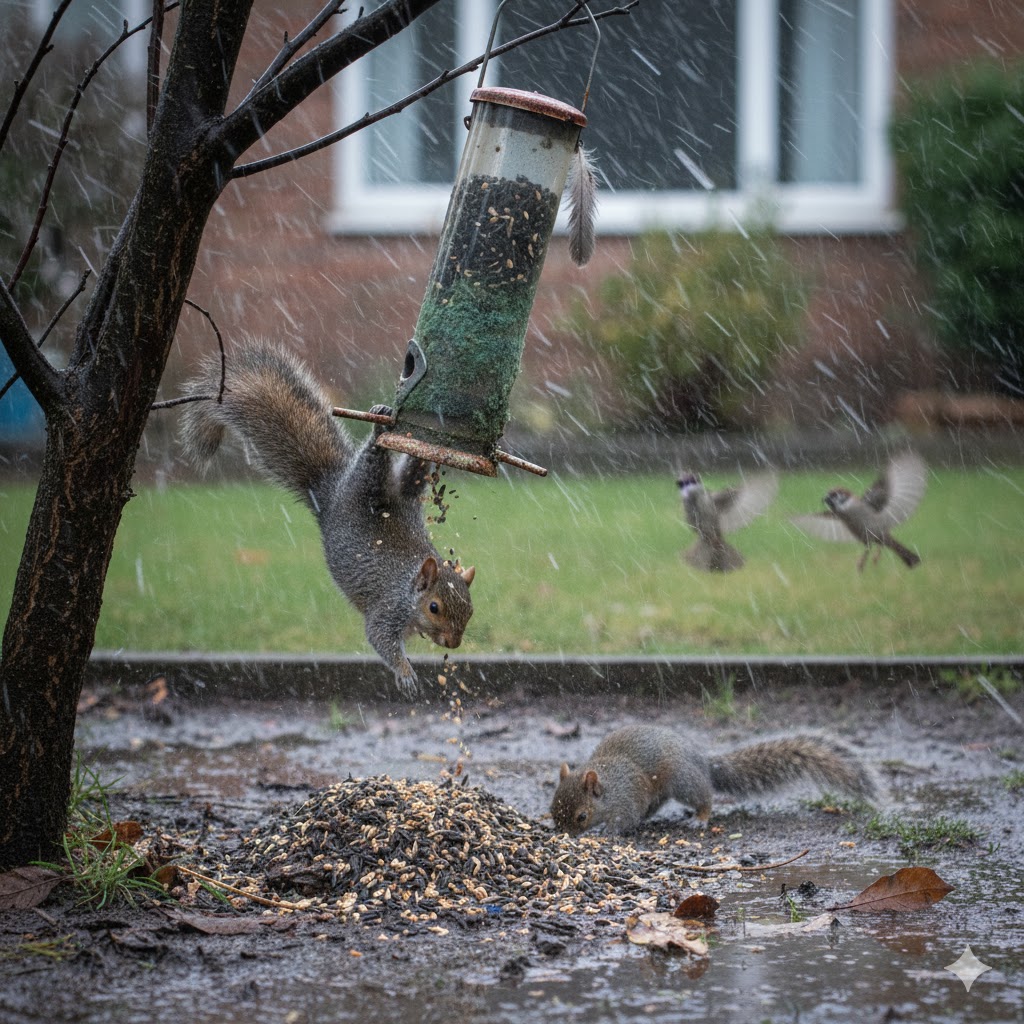
You bought a bird feeder, excited for a lively backyard. But now it is a moldy, squirrel-infested mess. The answer is not a better feeder, but a better setup.
Failures happen because feeders are not built to handle the combined forces of an outdoor environment like wind, rain, and squirrels. Success depends on managing the entire setup, not just the feeder itself, to control these uncontrolled variables.
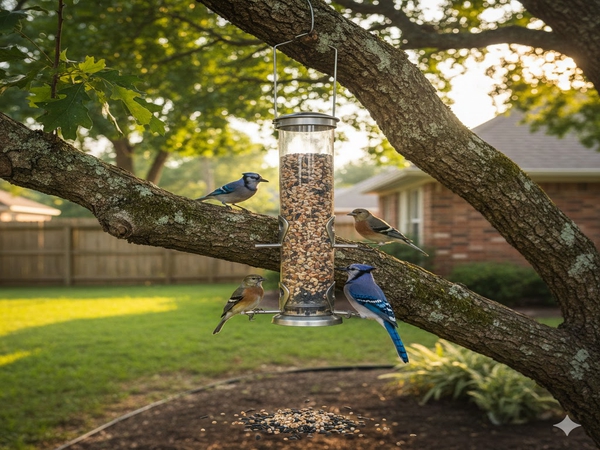
It's a common story. You start with high hopes, but reality quickly sets in. You find yourself in a constant battle against forces you did not anticipate. The good news is that these problems are solvable. It just requires a shift in thinking, from buying a product to building a system. Let's break down why things go wrong and what you can do about it.
Why Do Outdoor Bird Feeders Struggle in Real Conditions?
Your new feeder looked perfect in the store. Now, it is failing in your yard. The problem is not the feeder's quality; it is the complex environment it cannot control.
Bird feeders struggle because they are designed to hold food, not to manage the simultaneous challenges of an outdoor setting. Multiple factors like wind, rain, and humidity compound even small design weaknesses, leading to rapid failure when they act together.
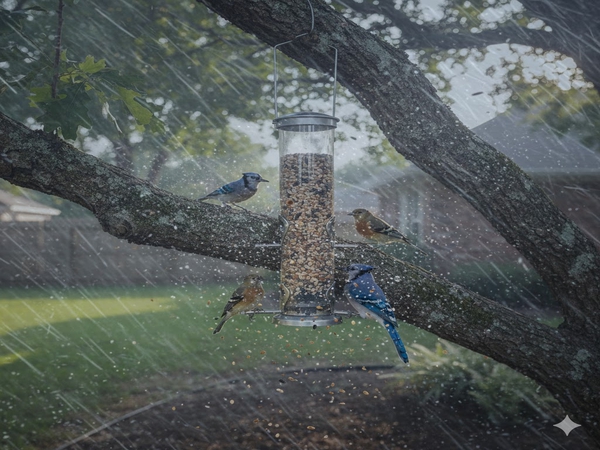
When I first started, I assumed a good feeder was all I needed. I quickly learned that a feeder is just one piece of a much larger puzzle. In the controlled environment of a store, every feeder looks perfect. But your backyard is not a store. It is a dynamic system where multiple forces are at play 24/7. A little rain might be fine. A little wind might be fine. But when you get wind-driven rain hitting a feeder that a squirrel just tilted, the whole system breaks down. The food gets wet, the feeder gets damaged, and the birds go elsewhere. It is this combination of factors, not a single weakness, that causes most setups to fail.
How Real Conditions Overwhelm a Feeder
| Factor | Ideal Condition (In-Store) | Real Condition (In Your Yard) |
|---|---|---|
| Weather | Climate-controlled, dry, no wind | Rain, high humidity, strong winds, intense sun |
| Pests | None | Squirrels, raccoons, large birds, insects |
| Food State | Always fresh, dry, and clean | Prone to mold, clumping, sprouting, and contamination |
Why Is Rain Only Part of the Problem?
You thought a rain guard would solve your soggy seed problem. But the seed is still getting wet and moldy. A simple cover is often not enough to keep things dry.
Rain is just one factor. Wind-driven rain gets in sideways, bypassing most guards. Worse, trying to completely seal a feeder often traps humidity inside, creating a perfect environment for mold and spoiling the seed even faster than direct rain.
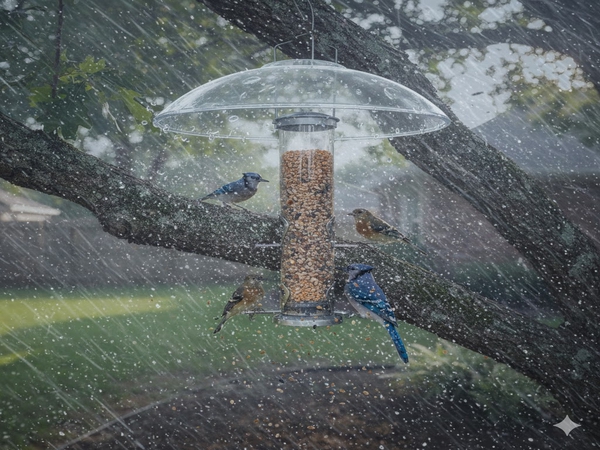
I learned this the hard way with my first "weatherproof" feeder. It had a nice big roof, and I thought I was set. Then a storm rolled in. I watched from my window as the wind blew rain completely sideways, and even upwards, under the cover. Everything inside was soaked. My attempt to solve the problem made it worse. I then tried a feeder that was almost completely sealed. After a cool, damp night, the morning sun hit the plastic feeder and caused condensation to form on the inside. All that trapped moisture turned the seed into a moldy brick. The lesson was clear: a feeder needs to breathe. Good drainage and airflow are far more important than a perfect seal.
The Two Main Moisture Problems
| Moisture Source | Common "Solution" | The Unintended Consequence |
|---|---|---|
| Top-Down Rain | A large roof or rain guard. | Does not stop rain blown in from the side or below. |
| Humidity & Condensation | Sealing all gaps and openings. | Traps moisture inside, creating a greenhouse for mold. |
Why Are Squirrels So Hard to Stop?
You have tried spicy seed and "squirrel-proof" feeders, but they keep coming back. The problem is not the squirrel's determination. It is the easy path you have given them.
Stopping squirrels is not about making the food unattractive; it is about eliminating their access routes. Blocking their physical path by strategically placing the feeder is far more effective and reliable than any deterrent or special device on the feeder itself.
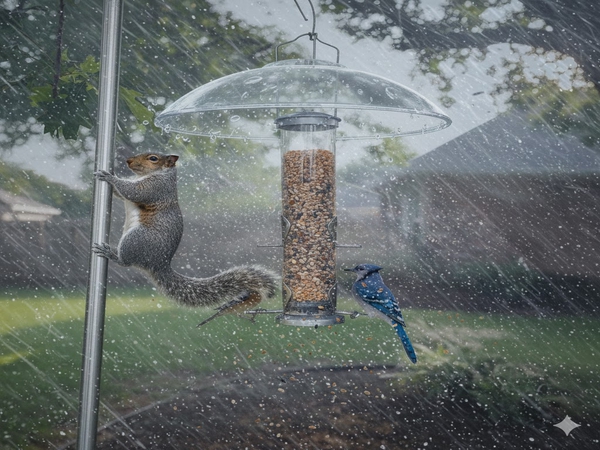
Squirrels are incredible athletes and problem-solvers. I once hung a feeder from a thin wire I was sure they could never cross. A week later, I watched a squirrel tightrope-walk its way across like a circus performer. I realized I was focused on the wrong thing. I was trying to make the feeder itself impossible to crack, but the real problem was the tree branch the wire was attached to. The solution is not a magic feeder; it is strategic placement. A good rule of thumb is to place your feeder at least 5 feet off the ground and 7-10 feet away from any launch point, like a tree, fence, or roof. Then, add a baffle on the pole below the feeder. This creates a physical barrier that stops them before they even get close. You do not have to defeat every squirrel, you just have to make it more trouble than it is worth.
Why Does Maintenance Become the Breaking Point?
You loved feeding birds, but now it feels like a chore. The constant cleaning and refilling is exhausting. The real issue is not the work itself, but the frequency.
Most people stop feeding birds because of the relentless maintenance. The mess from spilled seed, hulls, and droppings, plus the need for frequent cleaning to prevent mold, becomes overwhelming. Reducing upkeep is more critical for long-term success than achieving perfect protection.
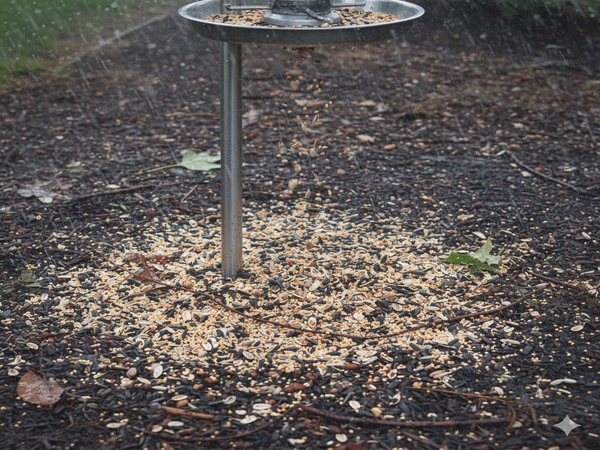
When I talk to people who have given up on the hobby, they almost never say, "The squirrels finally won." Instead, they say, "I just got tired of cleaning up that disgusting, moldy mess every few days." The romantic image of watching birds from your window quickly fades when you are constantly scrubbing feeders and sweeping up piles of waste. This is where user psychology comes in. The hassle of maintenance outweighs the joy of seeing the birds. The key to staying in the hobby is to design a setup that minimizes work. For me, this meant switching to no-mess seed blends with no hulls, using a large tray to catch spills, and placing my feeder over a patio that I could easily sweep. A setup that is 80% effective but requires 20% of the effort will always win over a "perfect" system that is a nightmare to maintain.
Why Do Single Fixes Rarely Last?
You bought a baffle, then a new feeder, then a weather guard. Each fix works for a while, then fails. You are treating the symptoms, not the root cause of the problem.
Single add-ons rarely provide a lasting solution because they only address one symptom at a time. Solving one problem, like squirrels, often exposes another, like moisture control. This cycle of replacing parts without addressing the whole system leads to repeated failure.
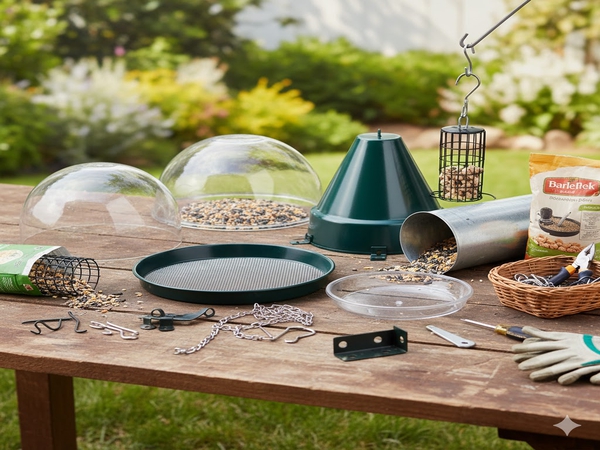
My first bird feeding setup was a classic case of "whack-a-mole." I started with a simple tube feeder, but squirrels emptied it daily. So, I bought a "squirrel-proof" feeder with a weight-activated cage. It worked! But the cage made it incredibly difficult to clean, and mold grew quickly. I then switched to an easy-to-clean feeder, but it had no protection, and the squirrels were back. I was just chasing one problem after another, spending more money and getting more frustrated. I was fixing individual parts instead of looking at the whole system. The location was wrong, the type of seed was messy, and I had no real weather protection. Buying a new feeder and putting it in the same broken system was never going to work. You have to step back and address the foundation: placement, stability, and the environment.
What Do Experienced Backyard Setups Do Differently?
You see photos of thriving bird-feeding stations and wonder how they do it. It looks complex, but the secret is surprisingly simple. They prioritize stability and placement over fancy features.
Experienced bird feeders prioritize a stable, well-placed system over complex, feature-rich feeders. They adapt their setup to the real-world conditions of their yard and focus on consistent, small improvements rather than searching for a single, perfect solution.
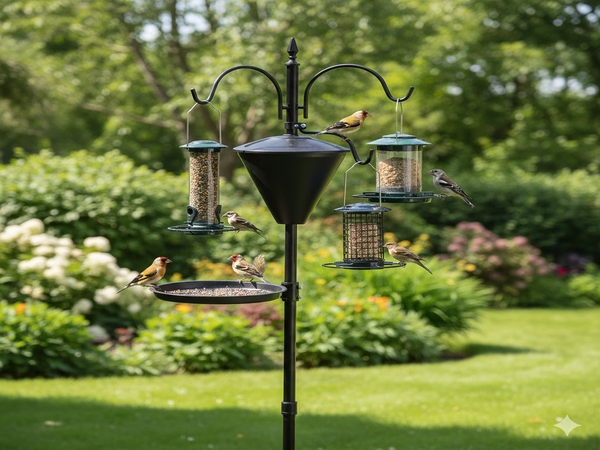
Beginners buy a feeder. Veterans build a station. That is the fundamental difference. A veteran's setup starts with a solid foundation: a sturdy pole system sunk into the ground, placed strategically away from trees and fences. On that pole, they mount a good baffle. Only then do they add the feeders. And often, those feeders are simple, durable, and easy to clean—not the most expensive or feature-packed models. They know that a simple tube feeder on a well-placed, baffled pole will outperform the most advanced "squirrel-proof" feeder hanging from a tree branch every time. They observe their specific environment—noticing which way the wind blows the rain, or where squirrels are attempting to jump from—and they make small, continuous adjustments. Their goal is not a "set-it-and-forget-it" system, but a manageable one that performs consistently.
Why Do Expectations Shape the Outcome?
You feel frustrated that your bird feeder is not working as advertised. The problem might not be the product, but the unrealistic expectations you have for it in your unique yard.
Unrealistic expectations are a primary cause of failure. No outdoor product can perform perfectly in every environment. Understanding the inherent trade-offs—like protection versus ease of cleaning—and setting clear limits prevents frustration and leads to long-term success.
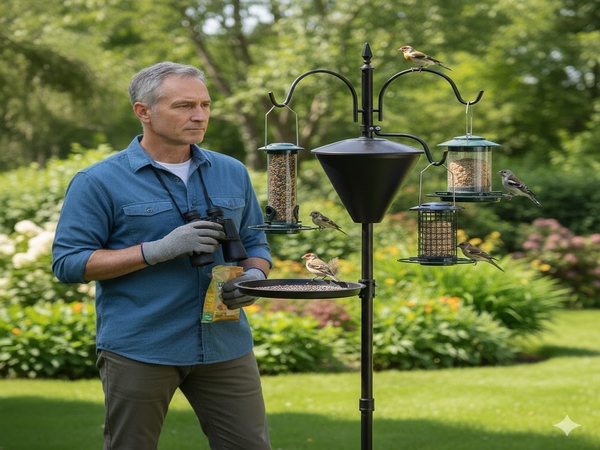
Bird feeders are often marketed as simple, magical devices that will instantly fill your yard with beautiful birds. The reality is that they are tools that must be used correctly within a larger system. Every choice you make involves a trade-off. A feeder that is 100% weatherproof might trap condensation. A feeder that is 100% squirrel-proof might be difficult to fill and clean. A feeder that attracts the widest variety of birds will also create the most mess. Success is not about finding a product with no downsides. It is about deciding which trade-offs you are willing to accept for your specific yard and your tolerance for maintenance. When you shift your mindset from "this product should just work" to "how can I manage this system," you move from frustration to enjoyment.
Common Bird Feeding Trade-Offs
| If You Prioritize... | You Must Accept... |
|---|---|
| Total Squirrel Proofing | A more complex and expensive setup, potentially harder to clean. |
| Maximum Weather Protection | Reduced airflow which can lead to condensation and mold. |
| Extreme Ease of Cleaning | Simpler designs that may offer less protection from pests. |
| Attracting Many Species | More mess from different seeds and more competition at the feeder. |
Conclusion
Bird feeding fails not from bad feeders, but from treating it as a product, not a system. Manage the environment, not just the feeder, for lasting success and enjoyment.